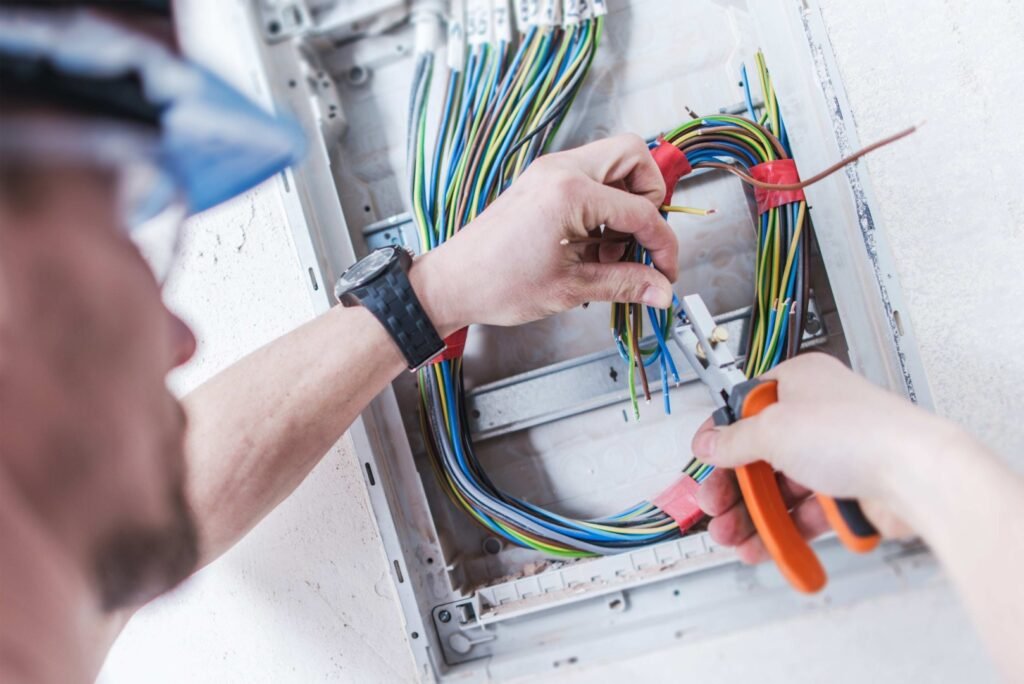
Get professional pre-wiring in North Wales, PA for cameras, alarms, intercoms, access control, and future-ready low-voltage systems in new construction.
Why Pre-Wiring Matters Before Construction Is Finished
Modern homes and commercial buildings often depend on security cameras, alarm systems, intercoms, access control, internet equipment, smart devices, and other connected technology. Installing the necessary cabling before walls and ceilings are closed can make these systems easier to organize, protect, expand, and maintain.
Safe Protect Home provides security and communication solutions for residential and commercial properties, including pre wiring for new construction.
Camera locations, entry points, control panels, workstations, communication devices, equipment rooms, and future expansion should all be considered before cable routes are finalized.
What Professional Pre Wiring Includes
Professional pre wiring and new construction services focus on installing organized low-voltage cabling before drywall, ceilings, or other finishes make access more difficult.
Depending on the project, the wiring plan may support:
- Security cameras
- Alarm sensors
- Door access control
- Intercom systems
- Network connections
- Smart home devices
- Audio and video equipment
- Control panels
- Communication systems
- Future technology additions
Pre wiring is not simply about placing as much cable as possible. The goal is to create an organized infrastructure that matches current needs while leaving sensible options for future upgrades.
Low-Voltage Pre Wiring in North Wales, PA
Property owners planning low-voltage pre wiring in North Wales, PA should make technology decisions before framing and finishing work reaches its final stages.
Start by identifying every location where security or communication equipment may be needed. Think about exterior doors, driveways, garages, hallways, stairways, entrances, offices, storage areas, and other important spaces.
Camera wiring should be positioned around the coverage plan rather than simply placed wherever cable access is easiest. Intercom and access-control wiring should account for doors, gates, release hardware, and control locations.
Planning early also makes it easier to keep low-voltage cables organized and separated from other building systems where necessary. A clear plan gives contractors a better understanding of what must be installed before walls close.
Why Structured Cabling Installation Helps Organization
A well-planned structured cabling installation creates predictable pathways and termination points for connected systems. Instead of running unrelated cables in random directions, structured cabling groups and labels connections so future service is easier.
A technician should be able to identify which cable serves a camera, intercom, keypad, door, or network location without tracing an unmarked line through the entire building.
Central equipment locations can also simplify management when designed correctly. However, the location should provide suitable access, ventilation, power availability, and room for equipment.
Accurate labels and diagrams can save time when technology is upgraded years later.
Security System Pre Wiring Should Follow the Security Plan
Security system pre wiring works best when cable locations are based on an actual security assessment.
For camera systems, installers should consider entry points, vehicle approaches, exterior activity areas, and interior spaces requiring visibility. Camera placement should avoid unnecessary blind spots while respecting practical mounting conditions.
Alarm wiring may connect door contacts, window sensors, motion detectors, keypads, sirens, control panels, or other compatible devices. Access-control systems can require wiring for readers, locks, request-to-exit devices, door contacts, and controllers.
The exact layout depends on the equipment selected for the property.
Running cable without knowing what device will use it can lead to poor placement. Early coordination between the property owner, builder, electrician, and security installer helps prevent those problems.
Plan Camera Locations Before Walls Close
Security camera performance depends heavily on location. A high-quality camera installed in a poor position may still leave important areas outside its useful view.
Before pre wiring, consider what each camera needs to see. Exterior cameras may cover doors, parking areas, driveways, loading zones, or property approaches. Interior cameras may monitor entrances, hallways, common areas, or business activity zones.
Mounting height and viewing angle should also be considered. Cabling should terminate near the intended mounting point without leaving excessive exposed wire.
Future landscaping, signs, lighting, awnings, shelving, or structural features can affect visibility, so plans should consider the finished property rather than only the unfinished framing.
Intercom and Phone Entry Wiring
Intercom and phone entry systems combine communication with controlled access. Proper pre wiring can support audio, video, power, door release functions, network connectivity, and other system features depending on the selected equipment.
For multi-unit buildings, offices, gated properties, and commercial entrances, wiring routes should connect entry stations with the appropriate control or communication points.
If an intercom will operate alongside access control, both systems should be coordinated. This can reduce duplicated cable paths and avoid conflicts around door hardware.
The final design should make it easy for authorized users to identify visitors and manage entry without complicated workarounds.
Door Access Control Needs Detailed Coordination
Access control can involve more components than property owners initially expect. A single controlled door may include a reader, electronic lock, door position contact, request-to-exit device, controller, power supply, and connection to other security equipment.
Because these components interact, the wiring plan should be developed before doors, frames, ceilings, and surrounding finishes are completed.
Door type matters as well. Different locking hardware and entry designs may require different cable paths.
For commercial projects with several controlled doors, labeling becomes especially important. Each cable should correspond clearly to the correct opening and device.
Planning access levels can also help determine where controllers and supporting equipment should be located.
New Construction Low-Voltage Wiring for Future Technology
New construction low-voltage wiring should support today’s systems without making reasonable future upgrades unnecessarily difficult.
Technology changes faster than buildings. A camera system, network device, or control platform may eventually be replaced even though the building itself remains unchanged.
Extra pathways, accessible conduits, spare cable capacity, or strategically placed termination points may provide flexibility when appropriate. The goal is not to predict every future device. It is to avoid creating a building where even simple upgrades require major demolition.
Property owners should discuss expected future uses such as additional cameras, expanded access control, smart devices, office reconfiguration, or new communication equipment during the planning stage.
Pre Wiring for Commercial Properties
Commercial buildings often have more complex wiring needs because they may combine surveillance, alarms, access control, intercoms, data connections, and multiple user areas.
Offices may need controlled doors, reception communication, cameras, and network connections. Retail properties may prioritize entrances, checkout areas, stock rooms, and exterior coverage. Warehouses may require longer cable runs and carefully planned camera positions.
Construction schedules also matter. Low-voltage work must be coordinated with framing, electrical installation, HVAC, fire systems, ceilings, and drywall.
A missed wiring location can become much more difficult to reach after finishes are installed.
Businesses should review floor plans carefully and confirm device locations before approving final cable placement.
Future-Ready Wiring Solutions in Norristown, PA
Builders and property owners considering future-ready wiring solutions in Norristown, PA can benefit from planning infrastructure around both immediate security needs and practical future expansion.
The wiring plan should identify where cameras, alarm devices, access controls, intercoms, network equipment, and central controls may be installed. Spare pathways may be useful in areas where future equipment is reasonably expected.
Commercial properties should also consider changing tenant needs. A space designed for one business may later require different security or communication equipment.
Clearly labeled and documented cabling can make those transitions easier.
Residential projects can benefit from similar planning by considering doorbell cameras, exterior surveillance, smart controls, and network-connected devices before interior finishes are complete.
Why Cable Labeling Matters
Once drywall is installed, most wiring disappears from view. Labels become the map that allows technicians to understand the hidden system later.
Each cable should be identified at termination points using a consistent naming method. Labels might correspond to rooms, doors, camera numbers, device types, or another organized plan.
Documentation should match those labels.
Without clear identification, technicians may spend unnecessary time testing lines to determine where they go. Poor labeling can also increase the risk of disconnecting the wrong device during maintenance.
This simple step does not add visual appeal to the finished building, but it can make future troubleshooting, upgrades, and equipment replacement significantly more efficient.
Protecting Wiring During Construction
Low-voltage cable installed early can be exposed to damage from other construction activity. Fasteners, drywall installation, equipment movement, cutting, and accidental pulling can all affect wiring before the building is finished.
Cable routes should be secured appropriately and kept away from obvious damage risks.
Termination ends should also be protected and left with enough usable length for final equipment installation.
Before walls close, installers should inspect the wiring and confirm important routes.
Discovering a damaged cable while framing is still open is much easier than finding the same problem after painting, cabinetry, and other finishes are complete.
Common Pre Wiring Mistakes to Avoid
Poor planning can reduce the value of an otherwise useful pre wiring project.
Common mistakes include:
- Forgetting important camera locations
- Installing cables without labels
- Ignoring future expansion
- Choosing inconvenient equipment locations
- Failing to coordinate with other trades
- Leaving inadequate cable length
- Running unnecessary visible wiring
- Placing terminations where furniture will block them
- Overlooking exterior doors or gates
- Failing to document concealed routes
Most of these problems are easier to prevent during planning than correct after construction.
A detailed review before drywall installation gives property owners and contractors one final opportunity to identify missing connections or poorly placed cables.
Questions to Ask Before Pre Wiring Begins
Property owners should understand what the wiring plan includes before installation starts.
Useful questions include:
- Which systems are being pre wired?
- Where will equipment terminate?
- Are all cables labeled?
- Will cable routes be documented?
- Where will cameras be mounted?
- Which doors need access control?
- Are intercom locations included?
- Is future expansion being considered?
- How will wiring be protected during construction?
- Who coordinates with the electrician and builder?
- Will installed lines be checked before walls close?
- What equipment will be installed later?
Clear answers help prevent assumptions and ensure the infrastructure supports the intended security and communication systems.
Conclusion
Pre wiring gives new homes and commercial properties an opportunity to build security and communication infrastructure before finished walls make cable installation more difficult.
Effective planning begins with real technology needs. Cameras, alarms, access control, intercoms, network equipment, and smart devices should be mapped around the way the property will operate.
Structured cable routes, careful labeling, useful documentation, coordination with other trades, and protection during construction all contribute to a cleaner and more serviceable system.
Property owners should also consider reasonable future expansion without filling the building with unnecessary cable.
By making these decisions early, builders can create organized infrastructure that supports current equipment and simplifies later upgrades, troubleshooting, or system changes.
Frequently Asked Questions
What does pre wiring mean in new construction?
Pre wiring means installing cables for security, communication, networking, or smart systems before walls and ceilings are closed. This creates concealed routes for equipment that will be installed later.
What systems can be included in low-voltage pre wiring?
Pre wiring may support security cameras, alarms, intercoms, access control, network connections, smart devices, audio-video equipment, and other compatible low-voltage technology.
When should pre wiring be completed?
Pre wiring is usually planned after device locations and framing are established but before drywall and other finishes close access to wall and ceiling cavities.
Why should low-voltage cables be labeled?
Labels help technicians identify hidden cable routes during installation, troubleshooting, maintenance, and future equipment upgrades without repeatedly testing unknown lines.
Should I install extra wiring for future devices?
Reasonable spare pathways or capacity can be helpful where future expansion is likely. The best approach depends on the property, expected technology needs, and construction design.
Can pre wiring reduce future renovation work?
Yes. When cable routes are planned before walls close, future security and communication equipment can often be installed with less need to cut finished surfaces or add visible wiring.