
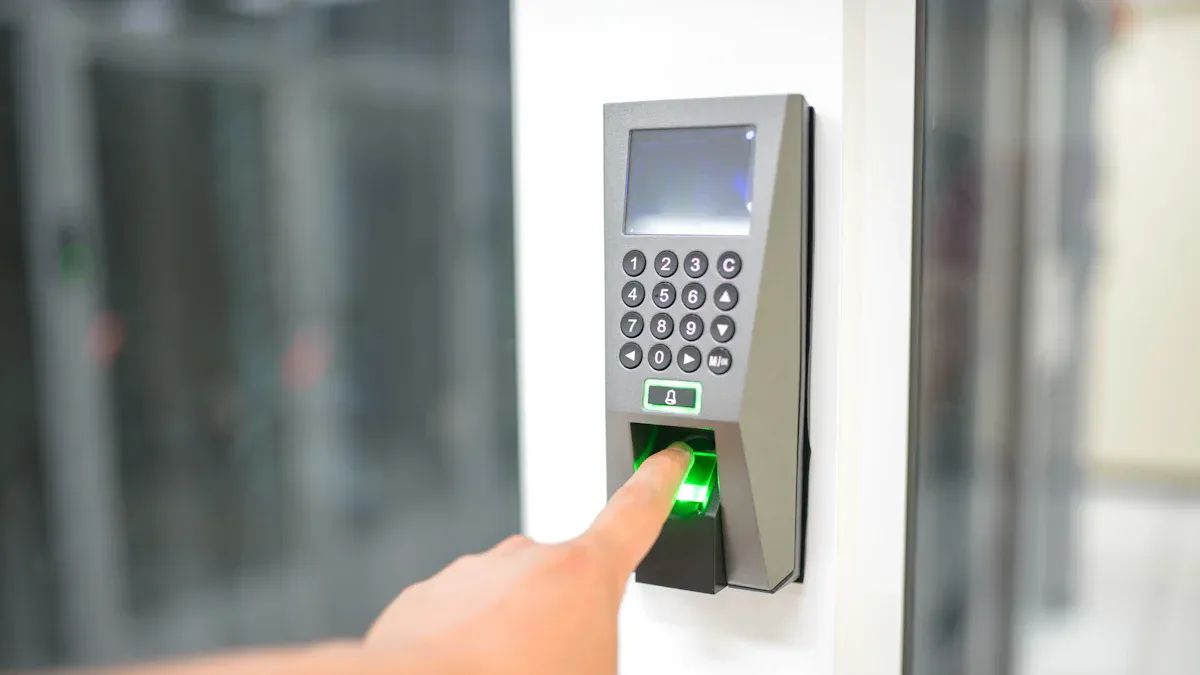
Improve property security with door access control in Darby, PA. Learn about keyless entry, card readers, mobile access, permissions, wiring, and maintenance.
Controlling who can enter a home, office, apartment building, warehouse, or commercial facility is an important part of modern security planning. Traditional keys can still work well, but they can be lost, copied, or difficult to manage when many employees, tenants, contractors, or visitors need different levels of access. Electronic access control gives property owners more flexible ways to manage entry while keeping a clearer record of who is authorized to use each door.
Safe Protect Home provides security solutions for residential and commercial properties, including CCTV installation, phone entry systems, pre wiring, structured cabling, alarm installations, monitoring, and door access control. A dependable access system should be designed around the property layout, number of doors, user needs, existing security equipment, and future expansion plans.
What Professional Door Access Control Includes
Professional door access control system installation can include electronic locks, keypads, card readers, mobile credentials, biometric devices, controllers, wiring, user setup, and integration with compatible security equipment.
The exact system depends on how the property operates. A small office may only need one controlled entrance and a limited number of users. A larger commercial building may require several doors, different permission levels, scheduled access, visitor management, and centralized administration.
A professional installation typically includes:
- Reviewing entry points
- Identifying doors that need control
- Selecting compatible readers and locks
- Planning wiring and controller locations
- Configuring users and permissions
- Integrating related security systems
- Testing every controlled door
- Explaining basic system management
- Planning for future expansion
- Providing ongoing technical support when needed
The goal is to make access more secure without making normal entry unnecessarily complicated.
Keyless Entry Installation in Darby, PA
Property owners considering keyless entry installation in Darby, PA should begin by deciding who needs access and how permissions should be managed.
A residence may use smartphone credentials or keypad codes for family members, service providers, and guests. An office may use cards, fobs, mobile credentials, or individual codes for employees. Multi unit properties may need separate permissions for residents, staff, maintenance teams, and shared areas.
The Darby area page confirms that Safe Protect Home provides smart access control systems with keyless entry options and remote management for local properties. The page also describes access methods using smartphone apps and keypads, along with features that allow users to grant or revoke access.
Why Electronic Access Control Improves Key Management
Traditional keys create a physical security problem when they are lost or copied. Replacing locks can become inconvenient when many users have keys to the same building.
Electronic access control can make permission changes easier. Instead of replacing a lock because one card or credential is missing, an administrator may be able to deactivate that individual credential while allowing every other authorized user to continue entering normally.
This flexibility is useful for offices, apartment buildings, warehouses, healthcare facilities, schools, and other properties where access changes frequently.
The best permission structure should be simple enough to manage consistently.
Card Reader Access Control for Commercial Properties
Card reader access control is a common option for workplaces and other commercial facilities. Users present a compatible card or credential to the reader, and the system checks whether that credential has permission to unlock the door.
Card systems can reduce the need to distribute physical keys. They can also make employee changes easier because individual credentials can be added or removed without changing every lock.
Reader placement matters. Equipment should be positioned where authorized users can reach it easily without interfering with door operation or pedestrian movement.
The selected reader should also be appropriate for its environment. An exterior entrance may require equipment designed for outdoor exposure, while interior doors may have different requirements.
Administrators should maintain accurate user records and remove credentials that are no longer needed.
Mobile Access Control and Smartphone Entry
Many modern access systems can support mobile access control, allowing compatible smartphones to function as credentials.
Mobile entry can be convenient because employees or residents often carry their phones throughout the day. It can also simplify credential distribution when supported by the selected platform.
However, property owners should think about how users will be enrolled, what happens when phones are replaced, and whether another entry method is available when a device is unavailable.
For some buildings, a combination of mobile credentials, cards, and keypad access may provide more practical flexibility than relying on one method for every user.
Access Control Wiring and Pre Wiring
Access control equipment often requires communication and power connections between readers, electronic locks, door contacts, request to exit devices, controllers, and supporting security equipment.
Wiring should be planned carefully, especially in new construction or major renovations. Installing suitable low voltage pathways before walls close can reduce visible cabling and make future upgrades easier.
Existing buildings may require different routing strategies based on wall construction, ceiling access, door frames, and equipment locations.
The installer should coordinate cabling with door hardware and electrical requirements. Poorly planned wire routes can make service difficult later or leave important components exposed.
Clear labels and documentation can also make troubleshooting, maintenance, and future expansion more efficient.
Door Access Control in Prussia, PA
Businesses considering commercial access control systems in Prussia, PA can use electronic entry management to control employee, visitor, contractor, and restricted area access.
The Prussia area page lists access control among the company’s security solutions and discusses customized systems for both residential and commercial properties. It also highlights integrated security planning, including surveillance, alarms, monitoring, and structured cabling.
Commercial access planning should begin with the building’s actual workflow. Main entrances, employee doors, storage rooms, server areas, management offices, loading areas, and other restricted spaces may require different levels of control.
The system should support normal business operations while helping reduce unauthorized entry.
Integrating Access Control With Intercom Systems
Access control becomes more useful when it works with visitor communication.
A phone entry or video intercom system can allow occupants or reception staff to communicate with visitors before unlocking the door. After identity is confirmed, compatible equipment may allow the authorized user to release the door remotely.
This arrangement can be useful for offices, apartment buildings, gated properties, medical facilities, and other locations where visitors should not enter freely.
Property owners should also decide how deliveries, after hours visitors, and emergency situations will be handled.
Access Permissions Should Match Real Roles
Access control works best when permissions are based on actual responsibilities.
Giving every user access to every controlled door can weaken the purpose of the system. Instead, administrators can organize users according to departments, job responsibilities, tenancy, or other practical groups.
Permissions should be reviewed whenever staffing, tenancy, or building use changes.
Keeping the system organized from the beginning is easier than correcting years of outdated users later.
Door Hardware Matters
Electronic security equipment cannot perform well if the physical door is damaged, misaligned, or difficult to close.
Before installing access control, the door, frame, hinges, latch, closer, and locking hardware should be reviewed. If the door does not close consistently, an electronic lock may not engage properly.
The dedicated Safe Protect Home service page notes that damaged door or frame replacement is excluded from its access control installation service. That makes evaluating physical door condition before installation especially important.
A security system should not be expected to compensate for structural or hardware problems.
Access Control for Offices and Workplaces
Office access systems can help control exterior entrances as well as internal areas.
Reception zones may remain accessible to visitors while employee areas require credentials. Server rooms, document storage, inventory areas, or management offices may have more restrictive permissions.
Businesses should also consider employee turnover. When someone leaves the organization, credentials should be disabled promptly. New employees should receive only the access needed for their role.
A documented onboarding and offboarding process helps keep permissions accurate.
Systems that provide activity records can also help administrators review when authorized credentials were used, depending on the platform and configuration.
Access Control for Multi Unit Properties
Apartment buildings and multi tenant properties have different access challenges.
Residents need convenient daily entry, while property managers need a practical way to add or remove permissions as occupancy changes. Visitors, delivery personnel, maintenance teams, and contractors may require temporary or limited access.
Keypad, card, mobile, and intercom features can be combined depending on the property.
Shared entrances, fitness rooms, storage areas, parking access, and management spaces may each need different rules.
Planning around real tenant behavior helps create a system that is secure without becoming frustrating to use.
Common Access Control Planning Mistakes
Several mistakes can reduce the value of a new system:
- Choosing technology before evaluating doors
- Giving every user unnecessary permissions
- Ignoring future expansion
- Failing to document credentials
- Poorly planning wiring routes
- Forgetting visitor access
- Overlooking after hours entry
- Not removing former users
- Ignoring door alignment problems
- Skipping regular system testing
Most of these problems are easier to prevent during planning than correct after installation.
Maintaining an Access Control System
Routine maintenance helps keep readers, locks, controllers, credentials, and supporting equipment operating correctly.
User lists should be reviewed regularly so former employees, tenants, or contractors do not remain active unnecessarily.
Exterior readers should also be checked for physical damage or environmental wear.
Software, firmware, and remote management tools may need updates depending on the platform. Maintenance should follow the requirements of the installed equipment rather than a generic schedule.
Questions to Ask Before Installation
Before approving an access control project, ask:
- Which doors should be controlled?
- What credential types are recommended?
- Can users have different permissions?
- Can access be scheduled by time?
- Will the system integrate with intercoms?
- Can it work with existing security equipment?
- Is new wiring required?
- What happens during a power outage?
- How are lost credentials removed?
- Can more doors be added later?
- Who manages user permissions?
- What maintenance is recommended?
Clear answers help property owners understand how the system will work after installation.
Conclusion
Door access control can provide a flexible alternative to managing large numbers of traditional keys. Keypads, cards, mobile credentials, electronic locks, intercoms, and centralized user permissions can help homes and businesses control entry more efficiently.
Successful installation begins with the property itself. Doors, frames, wiring routes, user roles, visitor needs, operating hours, and future expansion should all be considered before equipment is selected.
Access permissions also need ongoing management. Former users should be removed, credentials should be reviewed, and malfunctioning doors or readers should be serviced promptly.
When the physical door, electronic equipment, wiring, and management process work together, access control can provide a practical security system that remains easier to update as a property’s needs change.
Frequently Asked Questions
What is a door access control system?
A door access control system uses electronic credentials and locking equipment to manage who can enter selected doors. Depending on the system, users may enter with cards, keypads, mobile devices, or biometric credentials.
Can access control replace traditional keys?
It can replace keys at many controlled doors, but the exact setup depends on the property and selected hardware. Some systems may still include mechanical key access for specific situations.
Can I remove access when an employee leaves?
Yes. One major advantage of electronic access control is the ability to deactivate individual credentials without changing every lock or affecting other authorized users.
Can access control work with an intercom?
Yes. Compatible intercom and phone entry systems can allow users to communicate with visitors before remotely granting entry through an access controlled door.
Is access control suitable for small businesses?
Yes. Systems can be designed for one entrance or expanded across multiple doors. Small businesses can choose a setup based on their number of users, security needs, and budget.
When should an access control system be serviced?
Schedule service when doors fail to secure, readers respond inconsistently, credentials stop working correctly, wiring is damaged, or system management tools show operational problems.