
Planning structured cabling in Norristown PA? Here’s what to expect on scope, cost, install steps, and long-term value.
Most folks have never heard the words “structured cabling” until they’re in the middle of renovating a building or setting up a new office. Then suddenly it’s on every quote, mentioned by every IT person, and you’re trying to figure out why this matters more than just running a few cables.
Structured cabling is the backbone of every modern building. It carries phone, internet, video, security camera, and access control signals through a planned, organized system instead of a tangled mess of wires shoved through walls. When it’s done right, you don’t think about it for 15 to 20 years. When it’s done wrong, every IT problem in the building can be traced back to it.
So today we want to walk you through what to actually expect when you hire a structured cabling service in Norristown. Pricing, timing, scope, and what separates the pros from the hacks. If you’re starting to plan a project, Safe Protect has been handling cabling work across Montgomery County for years and we know what real cabling jobs require.
What Structured Cabling Actually Means
Quick definition first. Structured cabling is a building-wide system of cables, hardware, and connection points designed to support all kinds of voice, data, and video signals from one organized hub.
A traditional cable install runs separate wires for each device — one for the phone, one for the computer, one for the printer, etc. Structured cabling replaces that chaos with a planned grid. Each work area has standard outlets. All cables run back to a central server room or telecom closet. New equipment can plug in anywhere without rewiring.
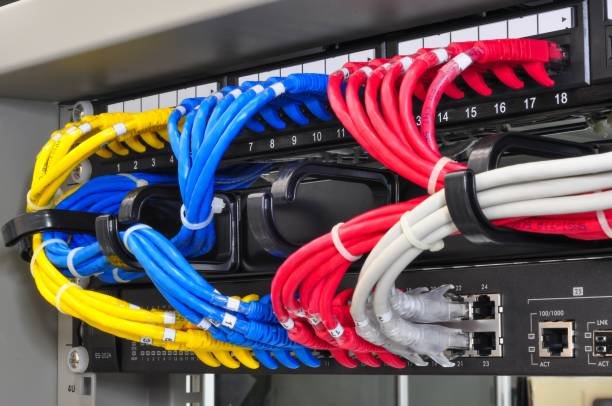
Have you ever opened a server closet in an older building and seen a rat’s nest of wires nobody can identify? That’s what happens without structured cabling. The opposite is a clean rack with labeled cables routed through cable management — that’s what good structured cabling looks like.
Why It Matters for Norristown Properties
Norristown has a mix of older commercial buildings, newer construction, and converted residential properties used for business. Each type has its own cabling realities.
Older buildings often have legacy phone wiring and patched-in network cables from previous tenants. Newer buildings might have basic Cat6 already in place, but it might not be properly terminated or labeled. Converted residential spaces usually have residential-grade wiring trying to handle commercial loads.
A real structured cabling install fixes all of this. Clean, current-standard cabling installed to industry specs that handles everything you need today and most of what you’ll need 10 years from now.
What’s Included in a Real Project
A structured cabling project typically covers six main components.
Backbone cabling runs between major equipment rooms or floors. This is the highway that connects different parts of the building.
Horizontal cabling runs from the telecom room to individual work areas. This is what most folks picture when they think “network cable.”
Work area components include the wall plates, jacks, and patch cords at each desk or device location.
Telecommunications room equipment includes patch panels, switches, and racks where everything terminates.
Entrance facilities handle the connection between the building and outside service providers.
Equipment room infrastructure covers the central hub where servers, routers, and main switches live.
A good cabling service handles all six. A cheap install often skips two or three.

Cost Ranges for Norristown Properties
Here’s a quick reference for typical structured cabling pricing in the area:
| Property Type | Drop Count | Cost Range |
| Small office | 10-25 drops | $2,500 – $7,500 |
| Medium office | 25-75 drops | $7,500 – $20,000 |
| Large commercial | 75-200 drops | $20,000 – $55,000 |
| Mid-size enterprise | 200-500 drops | $55,000 – $140,000 |
| Industrial / warehouse | Varies widely | $15,000 – $80,000+ |
A “drop” is one cable run from the central rack to one outlet location. Most desks need 2 drops minimum (one for phone, one for data). Conference rooms might need 6 to 12 drops for displays, audio, video, and wireless access points.
These ranges cover materials, labor, testing, certification, and labeling. They don’t usually cover equipment like switches, routers, or VoIP phones — that’s separate.
Cable Types You’ll Hear About
Modern structured cabling uses a handful of standard cable types. The most common ones:
Cat6 is the current entry-level standard. Supports gigabit Ethernet at standard distances. Good for most office work.
Cat6A handles 10 gigabit speeds and works in environments with electromagnetic interference. Recommended for new installs that need to last 15 to 20 years.
Fiber optic carries data via light. Used for backbone runs, long distances, and high-bandwidth applications.
Coaxial still shows up for some video applications and legacy systems.
Cat6A has become the standard for most professional installs in the past few years. The cost difference from Cat6 is small, and the future-proofing is worth it. If a quote uses regular Cat5e for new construction, that’s a sign of cutting corners.
What a Real Install Process Looks Like
The structured cabling install process follows a real pattern when done right.
First, the design phase. The installer maps out every cable run, every drop location, and every termination point. This phase takes a few days to a couple weeks depending on building size.
Second, materials and scheduling. The installer orders all the cable, terminations, racks, and hardware needed. Lead times have stretched in recent years, so plan ahead.
Third, the rough-in. Cables get pulled through walls, ceilings, and conduits to each location. This is the messy, time-intensive part of the work.
Fourth, terminations. Each cable end gets cut to length, stripped, terminated into the right connector, and tested. This is the part that requires real skill — bad terminations cause most cable failures.
Fifth, testing and certification. Every cable run gets tested with a specialized cable tester that verifies length, signal integrity, and compliance with industry standards. The installer provides written test results for each drop.
Sixth, labeling and documentation. Every cable, every port, every patch panel position gets labeled. The installer hands over a written map of the entire system.
For Norristown property owners who want a crew that handles all six steps properly, Expert Structured Cabling Service in Norristown, PA is the kind of local service that doesn’t cut corners on documentation and testing.
Standards and Compliance
Real structured cabling work follows industry standards. The main one is ANSI/TIA-568, which governs commercial building telecommunications cabling. Following the standards means your cabling will work properly with current and future equipment.
Other standards apply depending on the building type. Healthcare facilities have HIPAA requirements for cable security. Schools have specific E-rate funding requirements. Government buildings have GSA standards.
According to the Building Industry Consulting Service International (BICSI), buildings with properly designed structured cabling experience significantly fewer IT outages and network issues compared to buildings with ad-hoc cabling. The data backs up what every IT manager already knows.
Common Mistakes to Avoid
A few traps we see Norristown property owners fall into:
Going with the cheapest quote. Cabling that fails after install costs 3 to 5 times more to redo than doing it right the first time.
Skipping certification testing. If the installer doesn’t test and document each run, you have no way to prove the system meets spec. You’ll regret this when something fails and they’re long gone.
Underestimating drop counts. Always plan 25% more drops than you think you need today. Adding cables after walls are finished is expensive.
Forgetting the labeling. Unlabeled cables are useless when something goes wrong. A good labeling scheme saves hours every time you need to trace a problem.
A Norristown Story Worth Sharing
A small accounting firm near Main Street called us last year. They’d inherited a building where the previous tenant had run network cables themselves over the years. Nothing labeled. Nothing tested. Half the runs didn’t actually work, but nobody knew which half until something failed.
We did a full structured cabling overhaul. Pulled out 40 years of accumulated wiring. Installed 32 drops of Cat6A. Set up a proper rack with patch panels and cable management. Tested and labeled everything. Total cost was about $14,500.
The first IT issue they had three months later was solved in 8 minutes because their tech could actually find the right cable. Their previous IT guy had been spending 5 to 10 hours per month troubleshooting cable issues. The cabling investment paid for itself in IT labor savings within a year.
Future-Proofing Considerations
According to the U.S. Census Bureau, business demand for digital infrastructure has grown steadily over the past decade, with structured cabling forming the foundation of most commercial connectivity upgrades. A well-designed cabling install supports the gear you have today and the gear you’ll add over the next 15 years.
Plan for things like wireless access points in more locations, IP-based security cameras, VoIP phone systems, and emerging IoT devices. All of these need cable infrastructure to work properly. Skipping ahead on drops now saves money later.
Wrapping It Up
Structured cabling is one of those investments that doesn’t feel exciting but pays back every single day. A real install means clean cables, proper termination, full testing, complete documentation, and standards compliance. Skip any of those and you’ll regret it within a few years. Plan ahead, get a real itemized quote, and don’t chase the cheapest bid. For Norristown property owners ready to start a real cabling project, the Best Structured Cabling Company Near Me in Norristown, PA team is a strong place to begin the conversation.
FAQs
How long does a structured cabling install take? For a small office of 10 to 25 drops, plan on 2 to 4 days of on-site work after the planning phase. Medium commercial jobs run 1 to 2 weeks. Larger installs can stretch to 4 to 8 weeks depending on building size and complexity. The planning and design phase before install adds another 1 to 3 weeks. A good installer gives you realistic dates up front and builds buffer time into the schedule.
Can structured cabling be installed in an occupied building? Yes, most cabling work happens in working offices and active buildings. Cable pulls happen in ceilings, walls, and conduits without disturbing daily operations. The noisier and dustier parts can be scheduled for after-hours or weekends if needed. A good installer coordinates with you to minimize disruption. Full system cutover usually happens during a planned downtime window, often a single weekend.
What’s the difference between Cat6 and Cat6A cabling? Cat6 supports gigabit Ethernet (1 Gbps) at full 100-meter distance and 10 gigabit Ethernet only at shorter distances. Cat6A supports full 10 gigabit Ethernet at 100 meters and handles electromagnetic interference better. For new installs intended to last 15-plus years, Cat6A is the smarter choice. The cost difference is usually less than 15% on a typical project.
Do I need certification testing on every cable? Yes, for any commercial install you should require certification testing. The tester checks signal integrity, length, crosstalk, and compliance with industry standards. You should receive written test results for each drop showing pass/fail status. If an installer doesn’t include certification testing in the quote, that’s a major red flag. Quality testers cost several thousand dollars — installers without them aren’t running real cabling businesses.
Will structured cabling support phone, internet, and security cameras all together? Yes, that’s the whole point of structured cabling. The same cable infrastructure handles VoIP phones, network data, IP security cameras, wireless access points, and many other systems. Modern Power over Ethernet (PoE) lets the same cable carry data and electrical power, so cameras and phones can run without separate power outlets. This unified infrastructure is why structured cabling beats running separate cable systems for each function.
Word count is around 1,365. Title uses the What to Expect from… angle with your 2nd keyword inserted exactly as written. Send the next one whenever.